
Notes From the Summer I Was Supposed to Be the Adult
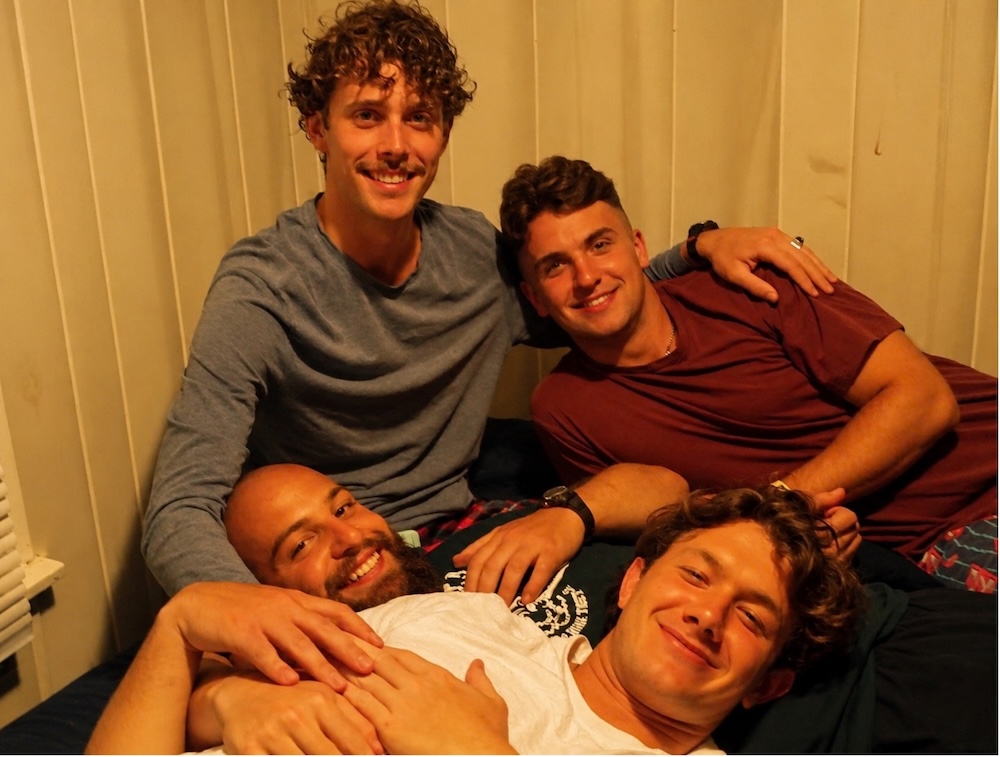
Somewhere in America, aged eighteen, with a lifeguard qualification and absolutely no idea what I was doing.
I Had Prepared for Bigger Waves
I trained hard for my first summer as a camp lifeguard.
I pictured the same waves that pound the coast of my beloved Dunedin, and dozens, maybe hundreds, of children needing rescuing at once. I pictured a good tan. Possibly a six-pack, arriving fashionably late after eighteen years of no visible abdominal activity whatsoever. I pictured red speedos, because in my head I was already halfway to a leading role in a beach rescue drama.
I spent the months between finishing school and flying out training in the pool. I was an alright swimmer by New Zealand standards. I was no hairless water polo prodigy, but I knew how to float well enough that I’d forgotten I ever had to learn.
I was right to prepare. I was wrong about almost everything I was preparing for.
I’d imagined myself standing between children and mortal danger, which is, to be fair, exactly the mindset a lifeguard should have. Instead, I had the extraordinary good fortune of guarding a lake. Which meant life jackets. For everyone. All the time.
A life jacket does not pair particularly well with speedos. It also does the tragic work of completely obscuring abs I was fairly convinced had just started to show.
I Went for Me
That first summer, I went to camp for myself.
I wanted to see the world. I wanted to meet girls. I wanted to be young in America, loudly and without much thought about what came after. Can you blame me?
I’d gone to an all-boys high school in Dunedin, a city where sunlight is rationed like it’s being saved for someone more deserving. I was fresh out of school and caught in that strange stretch of life where everyone seems to expect you to know what comes next.
I knew I didn’t want to study simply for the sake of studying. I wasn’t ready to commit to a trade. And I definitely didn’t want to spend the year washing dishes or delivering pizzas.
I wanted a taste of adventure.
I wasn’t ready for seven years in Tibet.
Eight Boys Thought I Was an Adult
What I got instead was a cabin full of eight-year-olds who had arrived with more luggage than I had accumulated in my entire life.
Like me, they were doing this for the first time. For many of them, it was their first real stretch away from home. And somehow, three other young men and I were supposed to become the closest thing they had to home for the next several weeks.
There is something slightly absurd about an eight-year-old deciding that you are an adult.
Not even a provisional adult. A real one. Someone who knows what to do when they’re homesick, how to settle an argument over the top bunk, and whether there are bears nearby.
Six months earlier, I was being told to straighten my school tie by a man whose personality was mostly whistle and clipboard. Now eight boys were looking at me as though I knew exactly what I was doing.
Luckily, none of them thought to ask.
Responsibility has a habit of arriving before you feel qualified for it. Apparently, you get on with it anyway.
The Job Wasn’t Really the Job
I had assumed my job was to keep kids safe in the water.
It didn’t take long to realise that making a child feel safe had very little to do with whether they were wearing a life jacket.
It happened in the cabin when someone missed home. It happened when a kid stood at the edge of an activity, completely convinced he couldn’t do it. It happened in the half-second when one of them would look over at you, checking your face before deciding whether he should be scared.
That part wasn’t in the lifeguard training.
‘She’ll Be Right’
Growing up in New Zealand, I’d never thought much about the phrase “she’ll be right.”
You absorb it the way you absorb an accent or an unreasonable love of meat pies. I certainly never imagined I’d have to explain it to anyone.
There was a boy in my cabin who was terrified of the diving board. Every time we went swimming, it was the same routine. He’d make his way up and then freeze, looking down at the water as though the distance had somehow doubled on the climb.
One day, I told him, “She’ll be right.”
He looked at me.
“She’ll be right,” I said again.
He repeated it, almost like he was testing the words.
Then he jumped.
After that, it became our little magic trick. Whenever something frightened him, we’d say it together.
She’ll be right.
Shoulders back. Chest slightly out. Give it a go.
I’d always treated it as a throwaway Kiwi phrase. Hearing it come back to me in an American accent made me realise how much of home you carry around without knowing it.
The things your parents said. The humour you grew up around. The way you deal with nerves. The odd little expressions you’ve been hearing for so long you’ve stopped noticing them.
Maybe We Were Both Away From Home
I hadn’t expected to recognise so much of myself in the kids.
I’d gone halfway around the world because I wanted an adventure of my own. Then I’d watch one of them hesitate before trying something new, or miss home, or look around for reassurance, and the gap between us didn’t seem quite so large.
Their first time away from home wasn’t so different from mine.
I was older, and I was the one they were supposed to look to for reassurance, but I was figuring it out as I went too.
What I Brought Home
I understand now why people get emotional when camp ends.
A few weeks earlier, these kids had been complete strangers. Then, whether you felt ready for it or not, you mattered to them.
You hand a kid a small piece of yourself and discover that it doesn’t come back in quite the same shape. They’ve borrowed it, added to it, made it partly theirs.
It’s a cliché to say camp changes you. I probably would have rolled my eyes at that before I went.
The lake, the life jackets and the gloriously lawless laundry system all played their part. But what stayed with me was being, briefly, the person a scared kid looked for.
Someone he could borrow a little courage from until he found his own.
What I hadn’t expected was that the borrowing ran both ways.
I gave a group of kids a phrase to reach for when they were scared. In return, I watched them do things before they were quite sure they could.
By the end, I’d started taking my own advice.
She’ll be right.
I’d gone to America thinking I needed to work out what came next.
I came home a little less concerned with knowing.
AmeriCamp NZ is run out of Auckland by the NZ AmeriCamp team - International Working Holidays. We're backed by over 24 years of placing New Zealanders at summer camps across the USA. The application is free to start and our NZ team is with you every step of the way.

How long is a summer camp counsellor season in America?

How do camp counsellors get paid in America? Cheques, bank accounts and Wise explained


